
Youth for Inclusive Communities
Module IV – Understanding and Reducing Vulnerabilities
Location: ADS – Alappuzha, Kerala
Dates: 10th – 12th October 2025
Partner Organisations: ADS, CEDS, FREED, and RTI
Resource Persons: Ms Punnya S. Pradeep and Ms Sindhura
Youth Participants: 25 (Male – 15, Female – 10)
The three-day experiential training on Understanding and Reducing Vulnerabilities offered 25 youth participants an engaging platform to explore the concepts of social inclusion, exclusion, and vulnerability in their communities. Designed as a participatory and reflective programme, it encouraged critical thinking and empowered youth to understand and address social realities affecting marginalised groups.
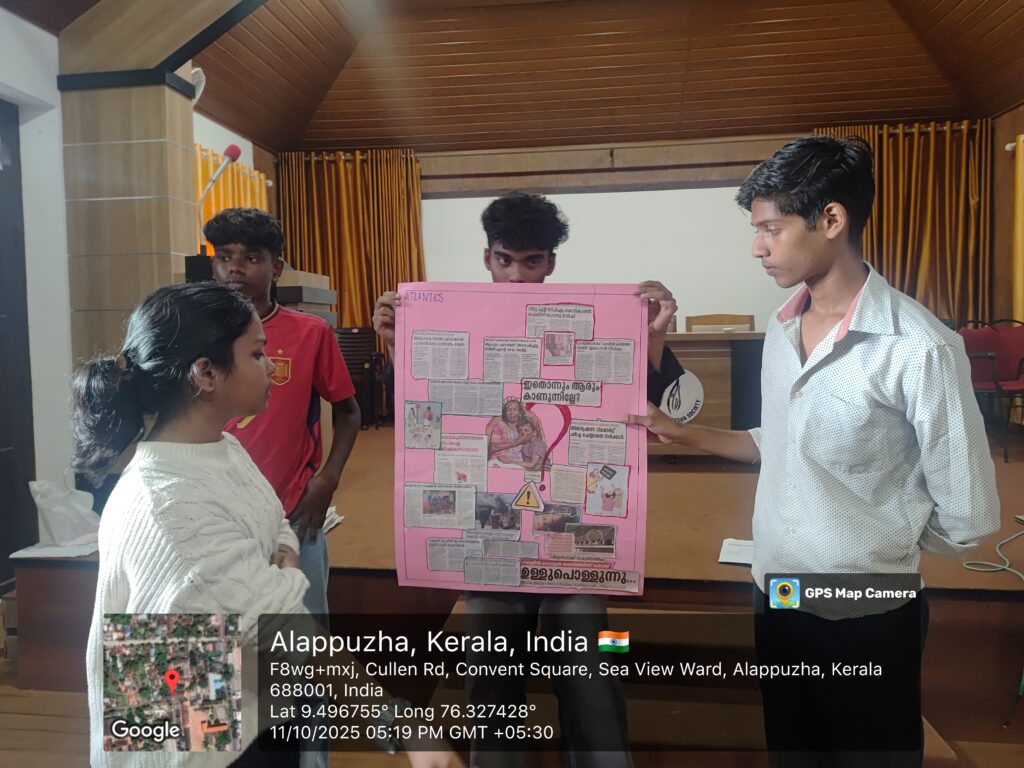
On the first day, Ms Sindhura facilitated an introductory session on social exclusion, highlighting how exclusion manifests in everyday life and affects both individuals and society. Through interactive activities, she guided participants to explore the connection between social exclusion and social inclusion, emphasising the importance of inclusive communities for sustainable development. Participants were divided into groups to conduct structural analyses of their communities and present their reflections creatively through pictorial charts and group discussions.
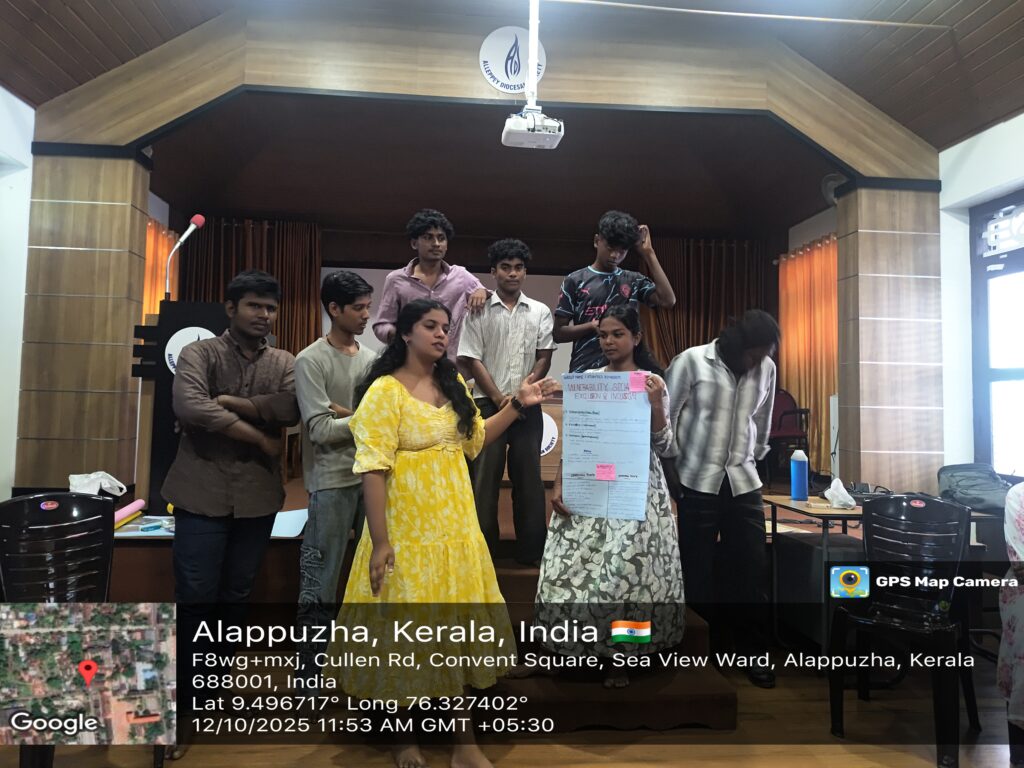
The second day was facilitated by Ms Punnya S. Pradeep, who conducted in-depth sessions on vulnerabilities, social exclusion, and social justice. She explained the interrelationship between exclusion and vulnerability, helping participants identify real-life barriers and inequalities. Youth groups prepared role plays depicting social situations such as interactions in government offices, job interviews, and accessibility challenges for persons with disabilities, illustrating systemic discrimination and exclusion. Ms Punnya also highlighted the contributions of reformers like Dr B.R. Ambedkar and Ayyankali, stressing the role of education in uplifting marginalised communities.
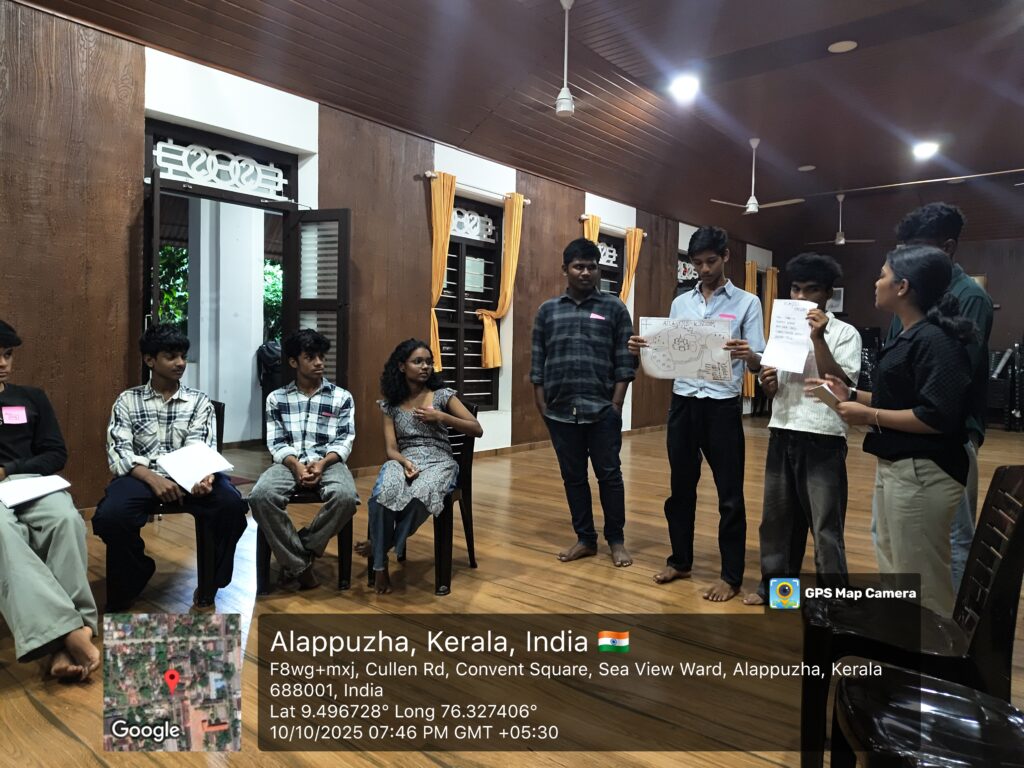
On the final day, Ms Punnya and Ms Sindhura co-facilitated sessions on social justice and constitutional rights, emphasising the need to safeguard citizens’ rights in all public institutions. Drawing from her professional experience with the District Child Protection Unit (DCPU), Ms Sindhura shared real-life stories of vulnerable individuals and how legal provisions were used to ensure their protection and empowerment. Participants then took part in the group activity “My Dream for My Community,” where they developed and presented community profiles outlining challenges and practical steps to promote inclusion, equality, and justice.
One of the participants, Kesiya, reflected:
“This training reminded me that understanding others’ struggles is the first step toward creating real inclusion in our communities.”
Jefin Sam Thankachan
State Facilitator, Kerala
Social Inclusion and Democracy