
Youth Engagement for Equality and Sustainability
Module V – Women and Mother Earth
Location: KAIROS – Kannur, Kerala
Dates: 24th – 26th October 2025
Partner Organisations: KAIROS, Thalassery Social Service Society (TSSS), and DSSS
Resource Persons: Mr. Mohan and Mr. Manoj
Youth Participants: 25 (Male – 15, Female – 10)
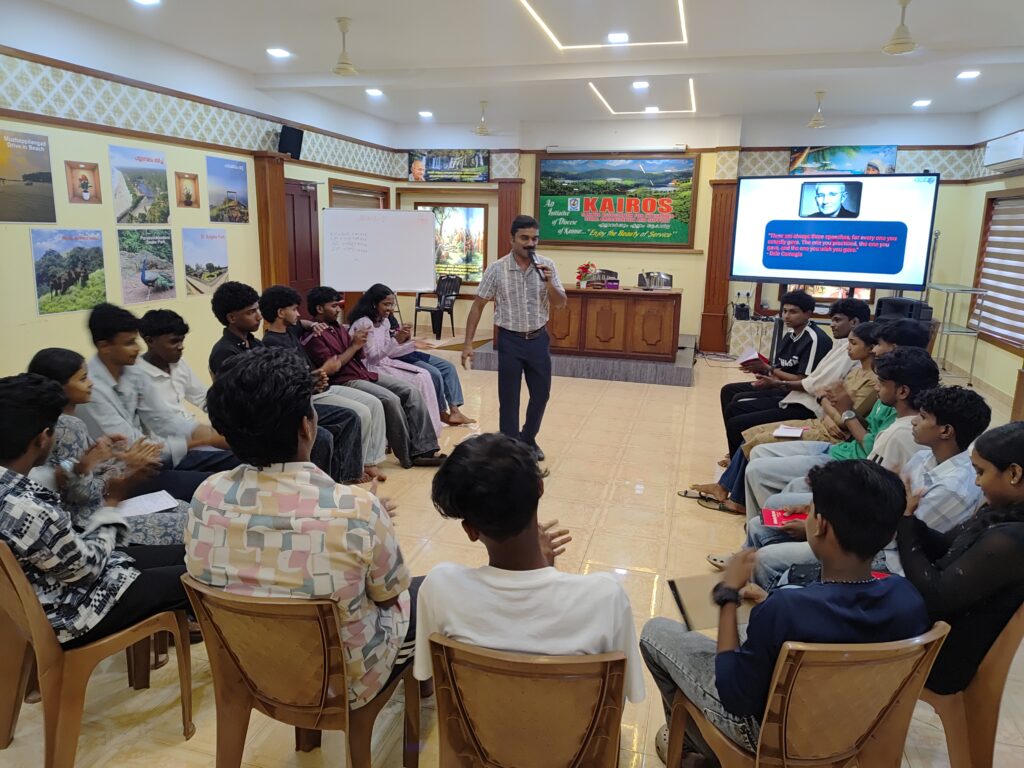
The three-day experiential training on “Women and Mother Earth” provided an insightful platform for 25 youth participants to explore the themes of gender equity and equality, sex and gender, transgender and sexual minorities, the Sustainable Development Goals (SDGs), and environmental protection. Designed as an interactive and participatory program, the sessions encouraged youth to think critically, reflect deeply, and raise their voices for gender justice and ecological sustainability within their communities.
Mr. Manoj engaged the youth with activities on women’s issues and gender-based discrimination, focusing on challenges faced by women in family life, workplaces, and society particularly in areas such as unequal wages and social exclusion. The participants examined the exploitation of women and their rights, emphasising the importance of inclusion and respect for equality on the core issues of education, marriage and family, employment and wages, and domestic violence. Each group presented their reflections creatively through role plays and group discussions, drawing inspiration from stories of empowering women such as Mary Kom and Hima Das.
Mr. Mohan, who led in-depth sessions on gender, sex, and sexual minorities on the second day, clearly explained the distinctions between gender and sex and introduced participants to diverse gender identities present in society today. The sessions included public speaking and debate activities on gender inequality and discrimination, which encouraged participants to articulate their perspectives and advocate for equality.
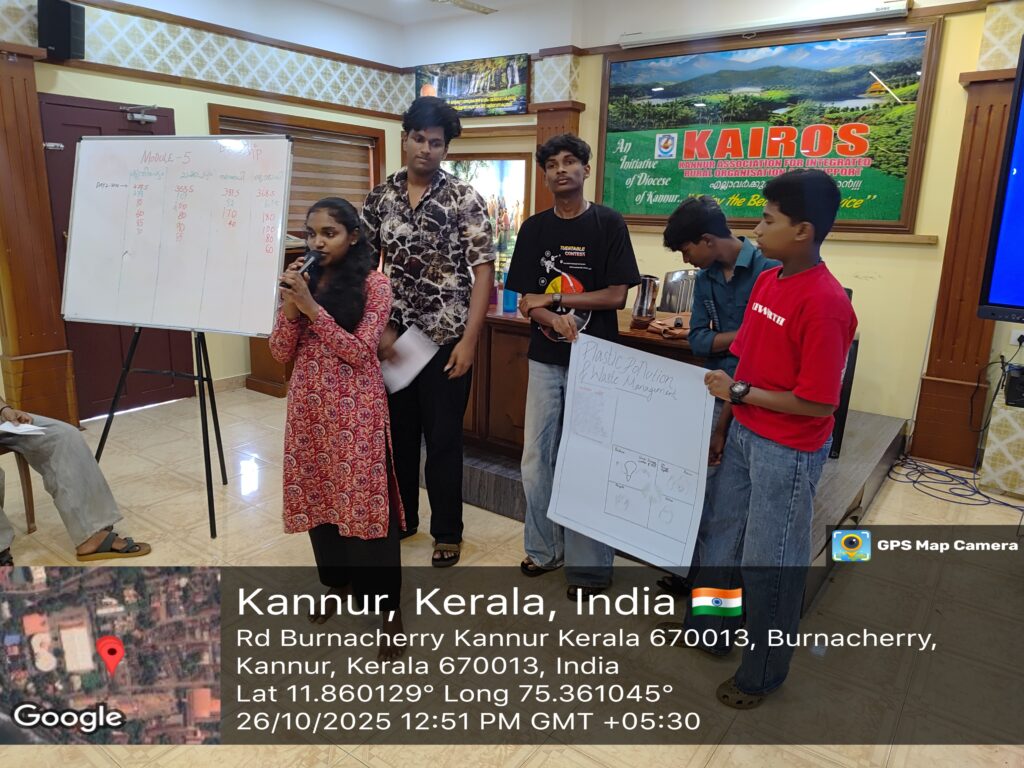
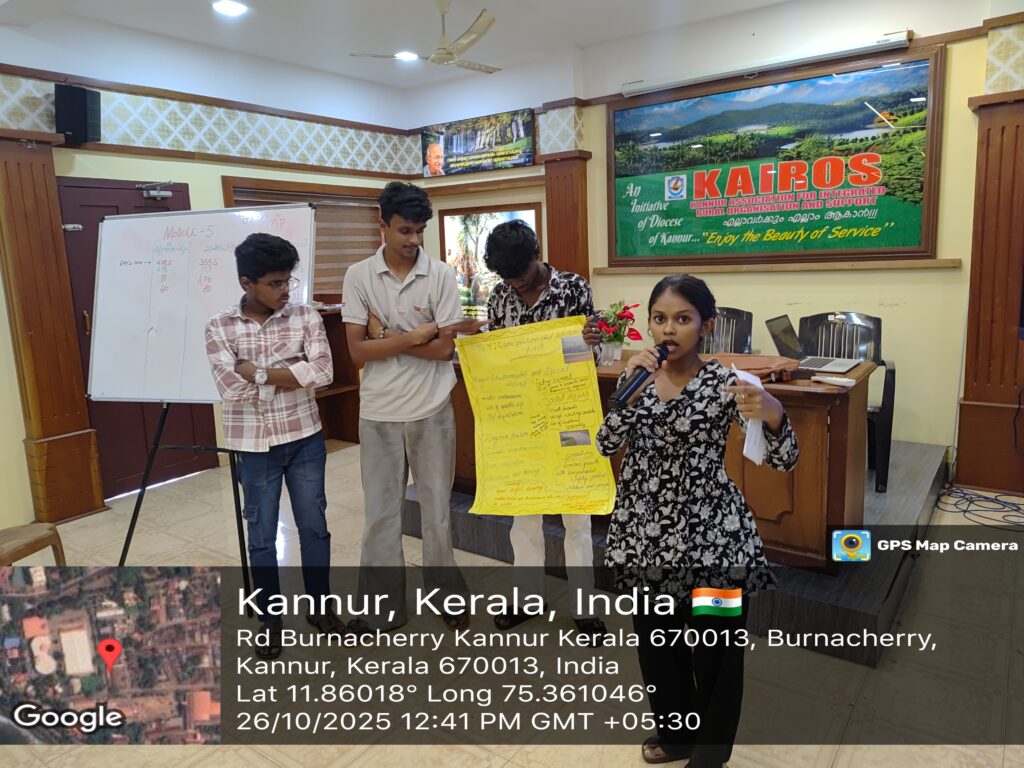
On the final day, Mr. Mohan and Mr. Manoj jointly conducted sessions on environmental protection and SDG 13 Climate Action. Through case studies such as the Chipko Movement and Narmada Bachao Andolan, participants learned how social movements can inspire environmental responsibility. In groups, they developed and presented environmental action plans focusing on plastic reduction, waste management, and creating carbon-free community spaces.
One of the participants, Asheir, expressed her heartfelt reflection:
“This training opened my eyes to how gender and nature are deeply connected. When we respect women and protect the Earth, we nurture life itself.”
Jefin Sam Thankachan
State Facilitator, Kerala
Social Inclusion and Democracy