
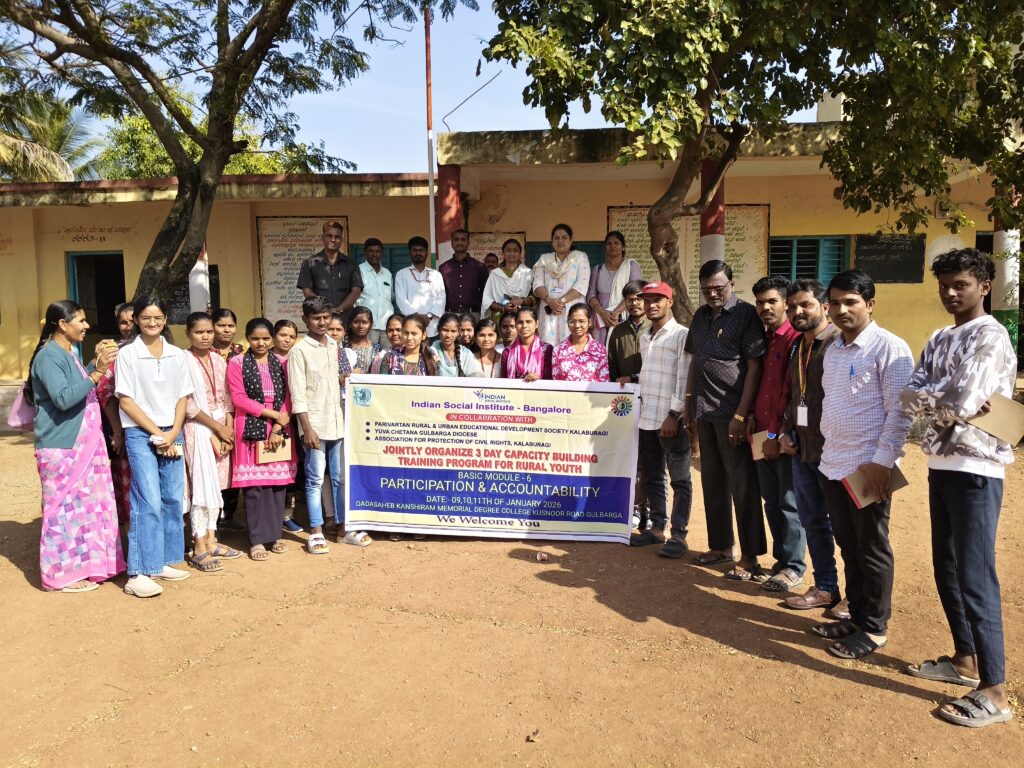
Programme Title: “Fostering Participation for Nurturing Grassroot Leadership”
Basic Module VI: Participation and accountability
Place: V.T.Foundation Kusnoor Gulbarga District, Karnataka
Dates: 9 – 11 January 2026
Partner Organization: Parivartan Rural & Urban Educational Development Society ® Gulbarga, Yuva Chetana Gulbarga Diocese, Association for Protection of Civil Rights, Kalaburgi.
Resource Persons: Laxman Janekal, Mobile No: – 9980650905, Eresha Manvi Mobile No :- 9483685456.
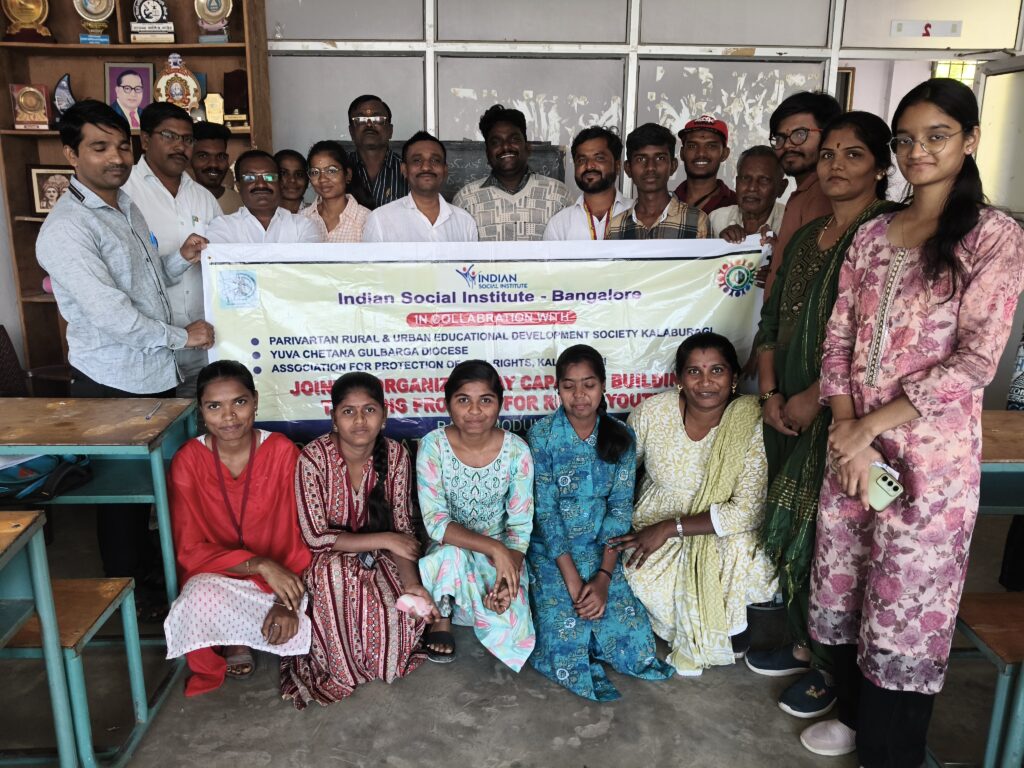
Youth Participants: 45 (Male -19, Female -23 TG-3 )
The successful completion of Basic Module VI (Participation and Accountability) marked a significant milestone in strengthening youth understanding of local governance, constitutional rights, and community leadership in the Gulbarga zone. The three-day capacity-building programme enhanced youth participation in Panchayati Raj Institutions (PRIs) and to build their confidence to engage meaningfully in Grama Sabha and Ward Sabha processes.
The programme began with sessions on the Panchayati Raj Institutions Act, its history, goals, and the 73rd Constitutional Amendment, highlighting how decentralisation empowers ordinary citizens to participate in governance. A field visit to Kusnoor Gram Panchayat provided participants with first-hand exposure to grassroots administration. Ms. Hema Sannur, Panchayat Development Officer, introduced the functioning of the Gram Panchayat, while Mr. Basavaraj, Panchayat Secretary, engaged openly with participants on development schemes such as MGNREGA, Atal Awas Yojana, Indira Awas Yojana, Basava Awas Yojana, and Ambedkar Awas Yojana, with special emphasis on provisions for SC/ST communities.
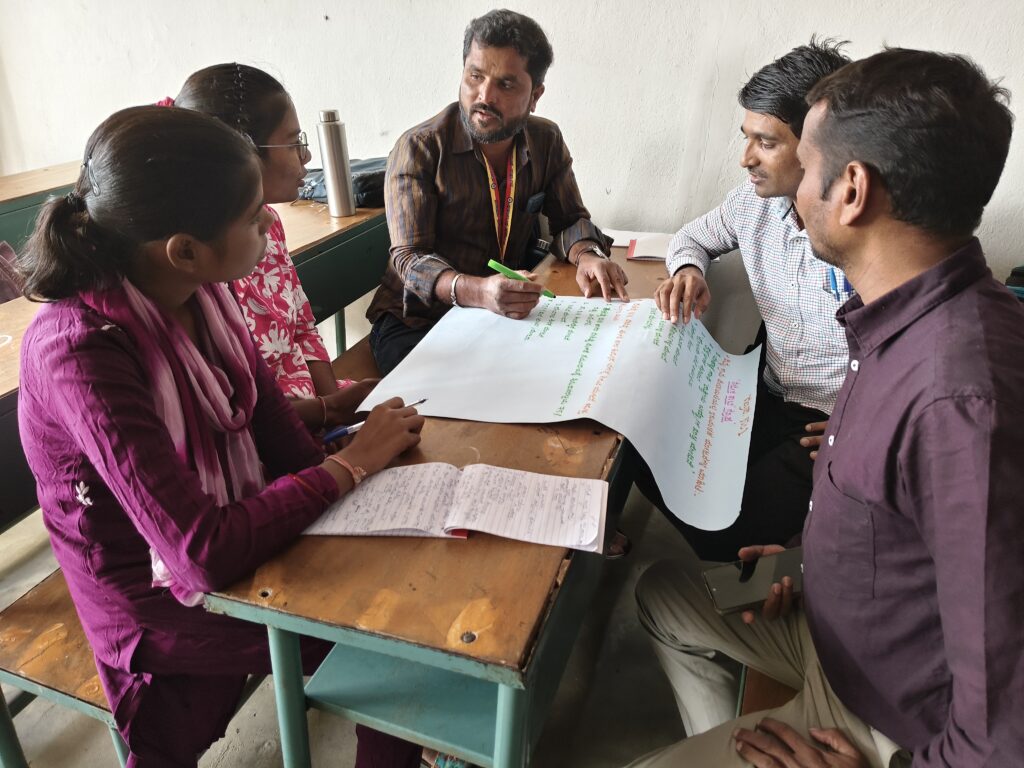
Mr Eresh Manvi facilitated interactive sessions with youth participants on the governance system, roles of standing committees, revenue generation, tax collection, and people’s participation. Special focus was given to the importance of Grama Sabha and Ward Sabha as democratic platforms and the critical role of youth in decision-making.
Participants also learned about Grama Sabhas, including those for women, youth, children, and adolescent girls, and the need for convergence among departments such as Health, Police, Education, Women and Child Welfare, Anganwadi, and ASHA workers to address community grievances and social protection.
Ankita, youth participant said, “About Gram Panchayat, nobody explained the schemes and facilities to us earlier. This training helped my future education and made me more confident. I have shared this learning with my LLB student friends”.
Sidram, differently abled youth participant shared, “My participation in Gram Sabha is very important to ensure the schemes not misused especially like MGNREGA.”
The youth capacity building training contributed significantly to youth empowerment, fostering informed participation and nurturing grassroots leadership for inclusive and accountable local governance.
Vasantkumar P
Facilitator, Karnataka
Social Inclusion and Democracy