
Program Title: “From Participation to Leadership: Youth Engagement in Local Governance”
Module VI – Participation and Accountability
Location: AADI, Mattathukad, Attappady, Palakkad
Dates: 26th – 28th December, 2025
Partner Organisations: AADI, SMSSS, and AKADS
Resource Persons: Ms Rohini Muthoor, Ms Anitha Baburaj, Mr Rakesh Youth Participants: 35 (Male -19, Female – 16)
“Many of us had not visited Panchayat office and spoke to the Office bearers. Through this training, we understood how we can raise our issues and participate in decision-making,” – Anamika, one of the participants, shared during the reflection session.
The three-day training on Participation and Accountability was organised by Indian Social Institute Bangalore, in collaboration with AKADS, AADI, and SMSSS, to strengthen tribal youth understanding of grassroots governance, accountability, and active citizenship. The programme engaged 35 young participants in a participatory learning process rooted in dialogue, reflection, and practical understanding.
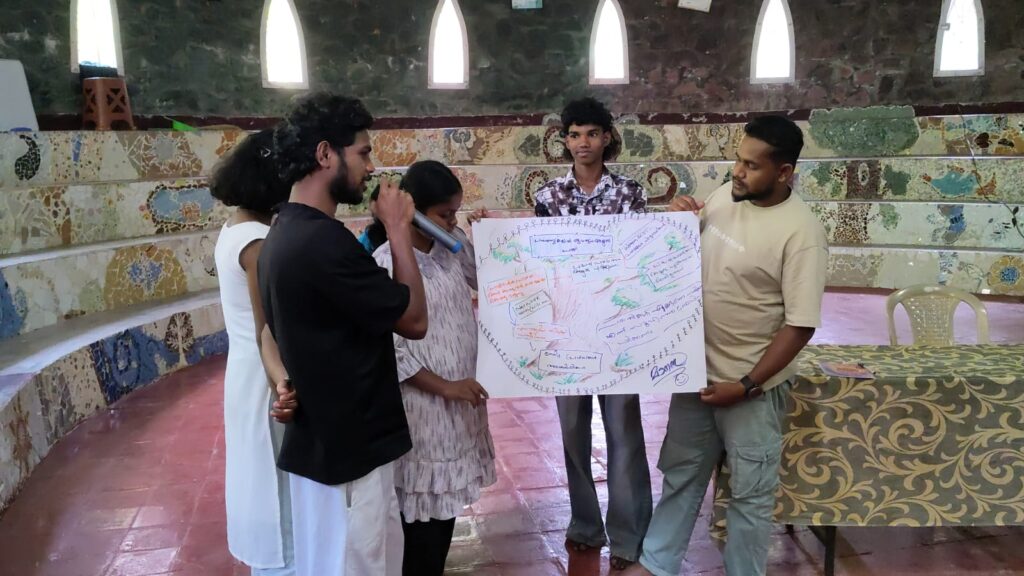
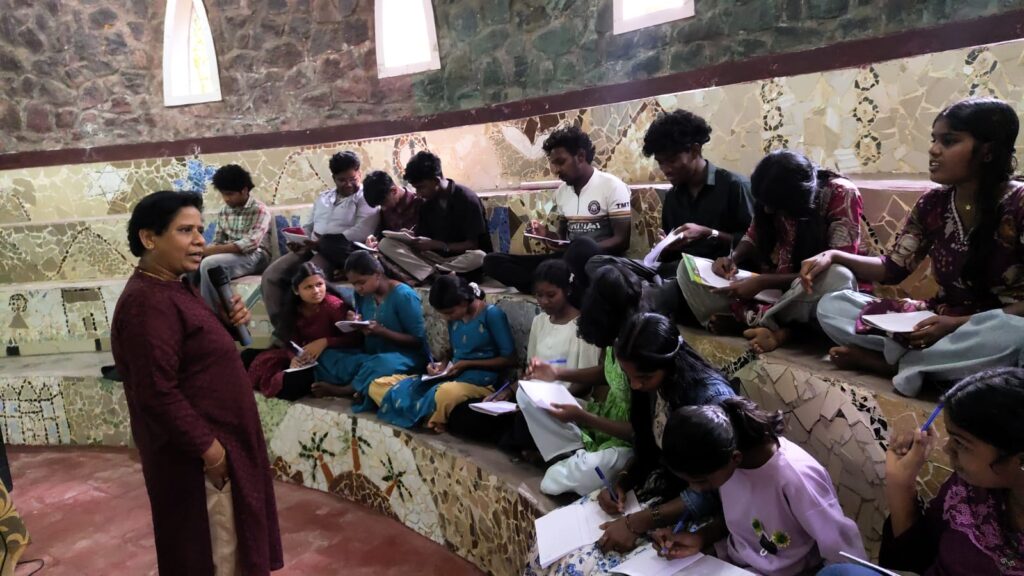
The initial sessions, facilitated by Ms. Rohini Muthoor and Ms. Anitha Baburaj from KILA, introduced participants to Panchayati Raj and local self-governance systems. Through interactive discussions and activities, participants gained clarity on ward-level structures, Grama Sabha, standing committees, and social security schemes.
Ms. Anitha Baburaj focused on youth participation and power structures within the Panchayat system. Participants learnt the roles of working committees and standing committees and discussed practical ways to raise community concerns through Grama Sabha and committee meetings. The sessions emphasised accountability, collective action, and the importance of informed participation.
The final day sessions facilitated by Mr. Rakesh, Coordinator of AADI, highlighted the role of youth in local governance and decision-making processes. He emphasised the importance of youth groups in strengthening community leadership, promoting local development, and sustaining participatory democratic practices at the grassroots level.
Reflective sharing sessions throughout the programme enabled participants to express increased confidence and clarity regarding their role in governance processes. The training strengthened their understanding of participation and accountability and encouraged them to actively engage in Panchayat-level decision-making and community development initiatives.
Overall, the programme enhanced the capacity of tribal youth to participate meaningfully in local governance, fostering a sense of responsibility, leadership, and commitment towards inclusive and sustainable community development.
Jefin Sam Thankachan
State Facilitator, Kerala
Social Inclusion and Democracy