
Workshop on ‘Peace, Reconciliation and Social Harmony’ in Osmania University
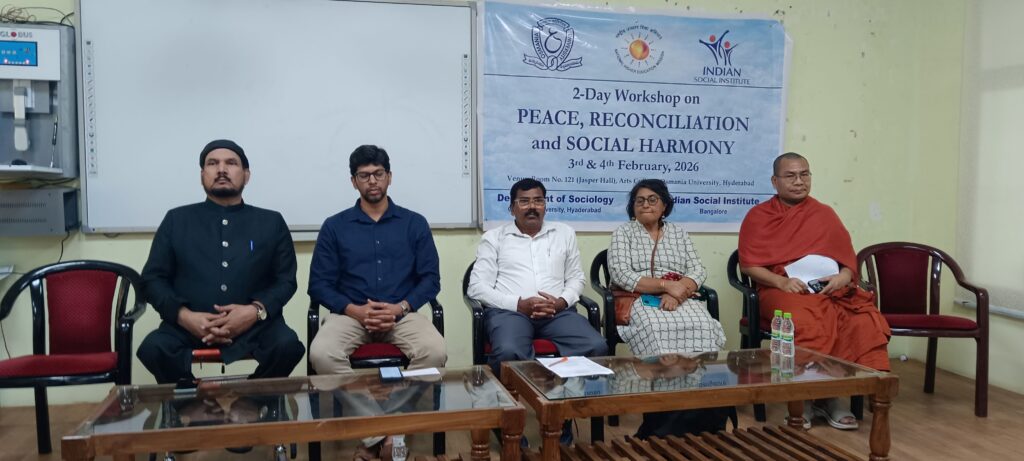
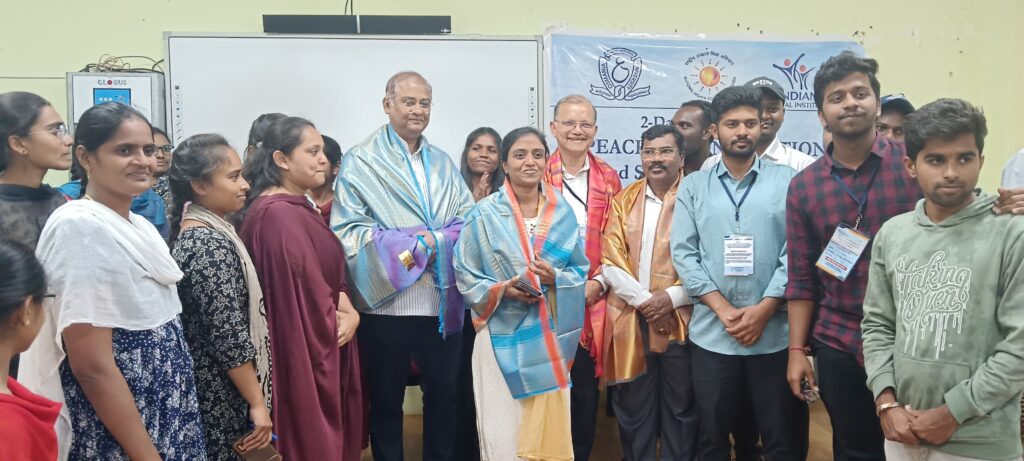
Indian Social Institute, Bangalore, and the Department of Sociology, Osmania University jointly organised a two-day State-level Workshop on ‘Peace, Reconciliation and Social Harmony’ at the Arts College, Osmania University, Hyderabad, on 3-4 February, 2026. The workshop brought together over 170 academicians from different Universities, civil society organisations, peace activists and students who deliberated on various conflicts that plague society and ways of bringing about social harmony.
The workshop began with a welcome address by Prof. Ram Shepherd Bheenaveni, from Department of Sociology, Osmania University, who invited all the participants to deliberate on promoting peace and social harmony in the country. Prof. P. Vishnu Dev, Head of Department of Sociology, pointed out the importance of social harmony in a diverse country like India. In his keynote address, Dr. Denzil Fernandes, Head of Department of Peace and Reconciliation at Indian Social Institute, Bangalore, pointed out that there were armed conflicts spreading in almost every part of the world due to identity politics, territorial disputes, and historical grievances. He asserted that most of the conflicts are a result of underlying cultural and structural violence in societies, manifested by inequality, discrimination and injustice experienced by certain sections of society. Consequently, sustainable peace can only be brought about by resolving conflicts through dialogue and integration of different communities in society through peacebuilding measures. Since peaceful co-existence of different communities living in India is a prerequisite for progress and development of India, he called upon every citizen to strive to promote social harmony in India.
The Chief Guest of the inaugural session, Ms. Maripally Chandana, member of the Telangana State Commission for Protection of Child Rights (SCPCR), highlighted the need to promote peace among children, who are influenced by violence in society and in social media. In the subsequent sessions academicians from different Universities and institutions presented papers during the workshop. Prof. Bangya Bukya spoke on the conflicts in tribal dominated regions fueled by the process of sanskritisation of tribal faiths. Prof. B. Nageswara Rao made a historical and critical appraisal of rationalist movements and religious texts from different religions and highlighted the vulnerability of religious texts to misinterpretation to justify violence and discrimination against non-believers or certain communities. Prof. M. A. Malik asserted that human dignity, scientific temper, democratic governance and social justice are the foundations of peace and social harmony in India. Dr. C.S.R. Prabhu shared about his efforts to arrive at a common ethical framework in his address on “Peace, Reconciliation and Social Harmony through Dharma Yoga as a Common Framework for All”. Dr. Sribala Mylavarapu from Henry Martin Institute spoke about the importance of the role of women in peacebuilding in her address on gendered and ethical perspective of peace, reconciliation and social harmony in polarised societies.
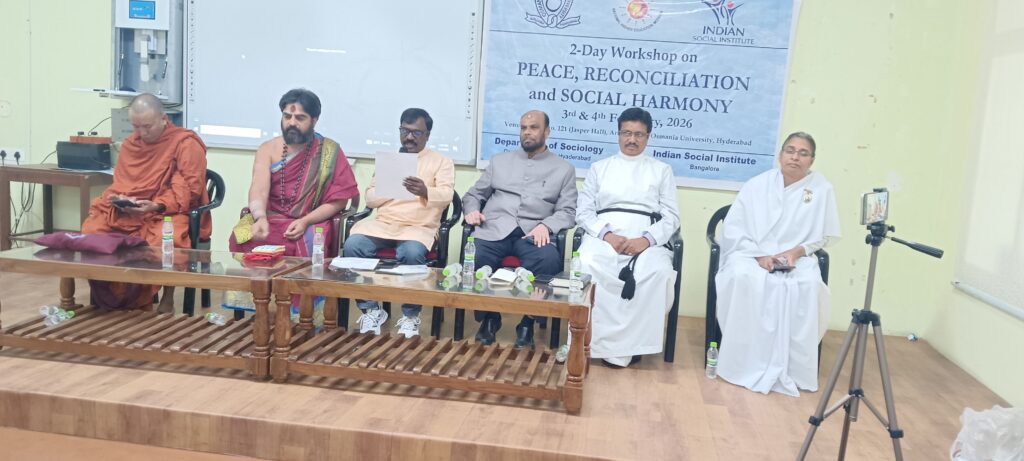
On the occasion of World Interfaith Harmony Week celebrated across the globe during the first week of February, a multi-faith panel involving religious leaders of Hindus, Muslims, Christians, Buddhists and Brahmakumaris, who spoke on their faith and spirituality that promote peace, reconciliation and social harmony.
The workshop also included an address by Mr. Ignatius Xavier on the importance of art in the promotion of peace and an interactive session on the promotion of peace through theatre on the theme “From Conflict to Connection: Group Dialogues for Lasting Peace” conducted by Chindu, a Dalit Cultural Resource Centre based in Hyderabad.
The workshop concluded on the International Day of Human Fraternity (Feb 4) with a call to all citizens of India to become peace ambassadors by promoting peace, reconciliation and social harmony in society.
Dr. Denzil Fernandes
Head of Department of Peace and Reconciliation,
Indian Social Institute, Bengaluru.